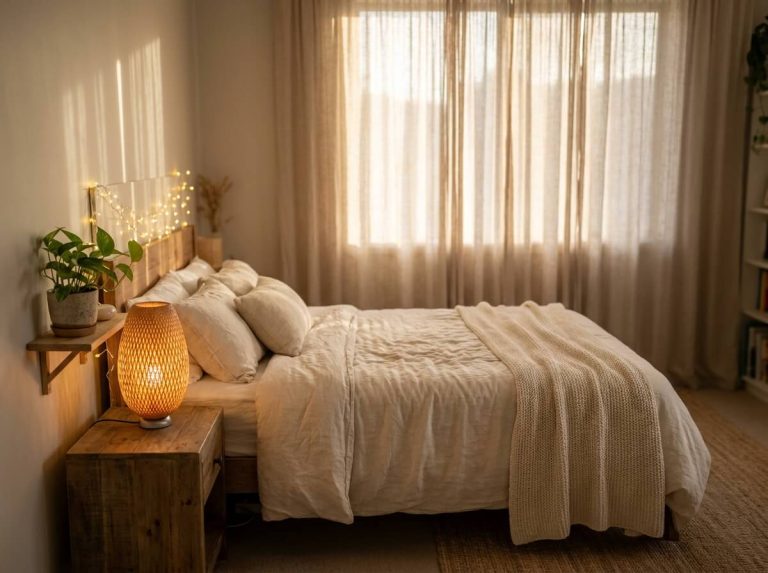
10 Small Bedroom Organization Hacks You’ll Wish You Knew
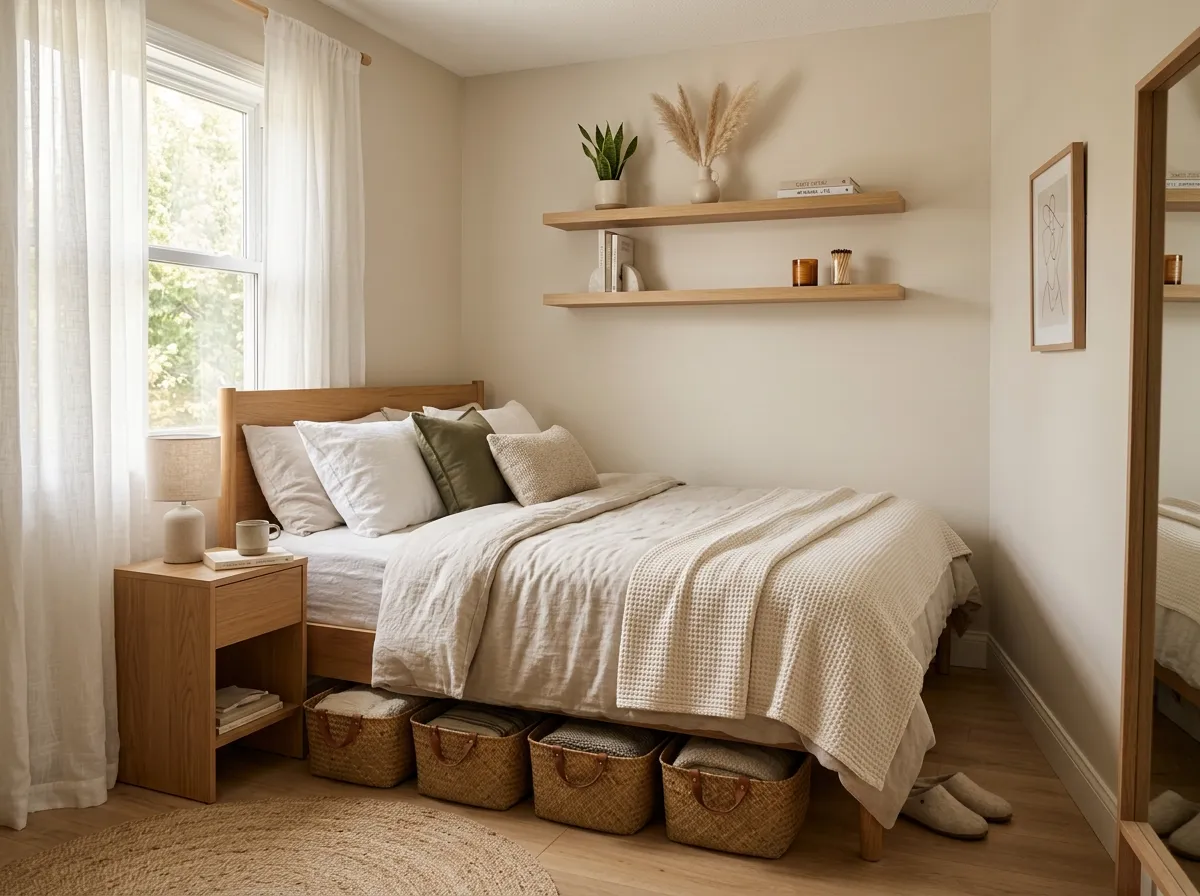
If you’ve ever stood in the doorway of your bedroom wondering how such a small space managed to collect so much stuff, you’re not alone. Small bedroom organization is one of the biggest challenges for renters, apartment dwellers, students, and homeowners alike. Clothes pile up, surfaces disappear under clutter, and the room that’s supposed to be your calm retreat starts to feel more like a storage unit.
The good news? You don’t need a bigger bedroom to feel more organized — you just need smarter systems. In this guide, we’re sharing ten practical, budget-friendly hacks that will help you reclaim your space, reduce daily stress, and make your small bedroom feel twice as big. Whether you’re working with a cramped studio, a shared dorm room, or a cozy guest room, these tips are designed to work in real homes, not just Pinterest boards.
Why Small Bedroom Organization Matters
Small bedrooms get cluttered fast for a simple reason: less square footage means every item has a bigger visual impact. A stack of books on the floor in a large bedroom might go unnoticed. That same stack in a small bedroom can make the entire room feel chaotic.
There’s also a practical side to this. Small spaces naturally have less built-in storage — smaller closets, no room for dressers, and limited floor space for furniture. Without a plan, things end up piled on chairs, shoved under the bed, or stacked precariously on nightstands.
The benefits of organizing a small bedroom go beyond aesthetics. A well-organized room:
- Makes it easier to find what you need in the morning
- Reduces visual clutter, which can lower stress and improve sleep quality
- Creates the illusion of more space, even in a tiny footprint
- Makes cleaning and maintenance faster and easier
- Helps you feel more in control of your environment
Organizing a small bedroom isn’t about owning less (though decluttering helps). It’s about being intentional with every inch — using vertical storage solutions, multi-functional furniture, and smart systems that keep everyday items accessible without taking over your space.
Quick Overview: 10 Small Bedroom Organization Hacks
Short on time? Here’s a snapshot of all ten hacks before we dive into the details.
| # | Hack | Best For | Estimated Cost |
|---|---|---|---|
| 1 | Under-Bed Storage Containers | Off-season clothes, shoes, linens | $ |
| 2 | Floating Shelves | Books, decor, small essentials | $$ |
| 3 | Vertical Organization | Closets, walls, corners | $ |
| 4 | Multi-Functional Furniture | Ottomans, storage beds, benches | $$$ |
| 5 | Over-the-Door Organizers | Shoes, accessories, toiletries | $ |
| 6 | Closet Dividers | Clothes, folded items | $ |
| 7 | Storage Baskets and Bins | Miscellaneous clutter, toys, cords | $ |
| 8 | Nightstand Organization System | Daily essentials, chargers, skincare | $ |
| 9 | One-In-One-Out Rule | Ongoing decluttering | Free |
| 10 | Hidden Storage Spaces | Awkward corners, under furniture | $$ |
Key Takeaways
- Small bedroom organization relies on maximizing vertical space, not just floor space.
- Multi-functional furniture and hidden storage solve the “no extra room” problem.
- Decluttering before buying storage prevents wasted money and wasted space.
- Small, consistent habits (like one-in-one-out) keep your room organized long term.
- A tidy bedroom improves both function and mental clarity.
10 Small Bedroom Organization Hacks You’ll Wish You Knew
1. Use Under-Bed Storage Containers
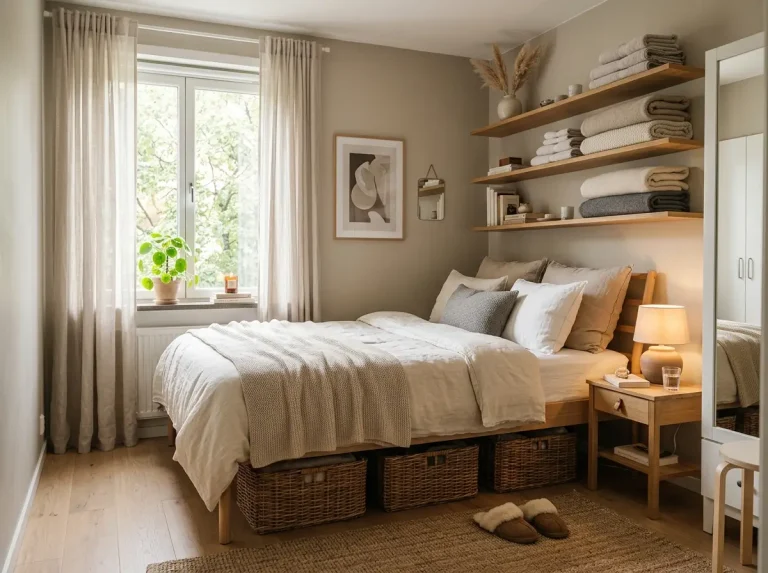
The space under your bed is one of the most overlooked storage opportunities in any small bedroom. Instead of letting it collect dust bunnies and stray socks, turn it into a functional storage zone.
Under bed storage works especially well for items you don’t need daily, such as off-season clothing, extra bedding, shoes, or luggage. Clear plastic bins let you see contents at a glance, while fabric bins with lids keep things looking tidy even if the bed skirt doesn’t quite reach the floor.
To implement this, measure the clearance under your bed frame before buying containers. Low-profile bins with wheels make it easy to slide items in and out without straining your back.
Pro Tip: Use vacuum-seal bags inside your under-bed bins for bulky items like comforters or winter coats. This can cut the storage footprint by more than half.
2. Install Floating Shelves
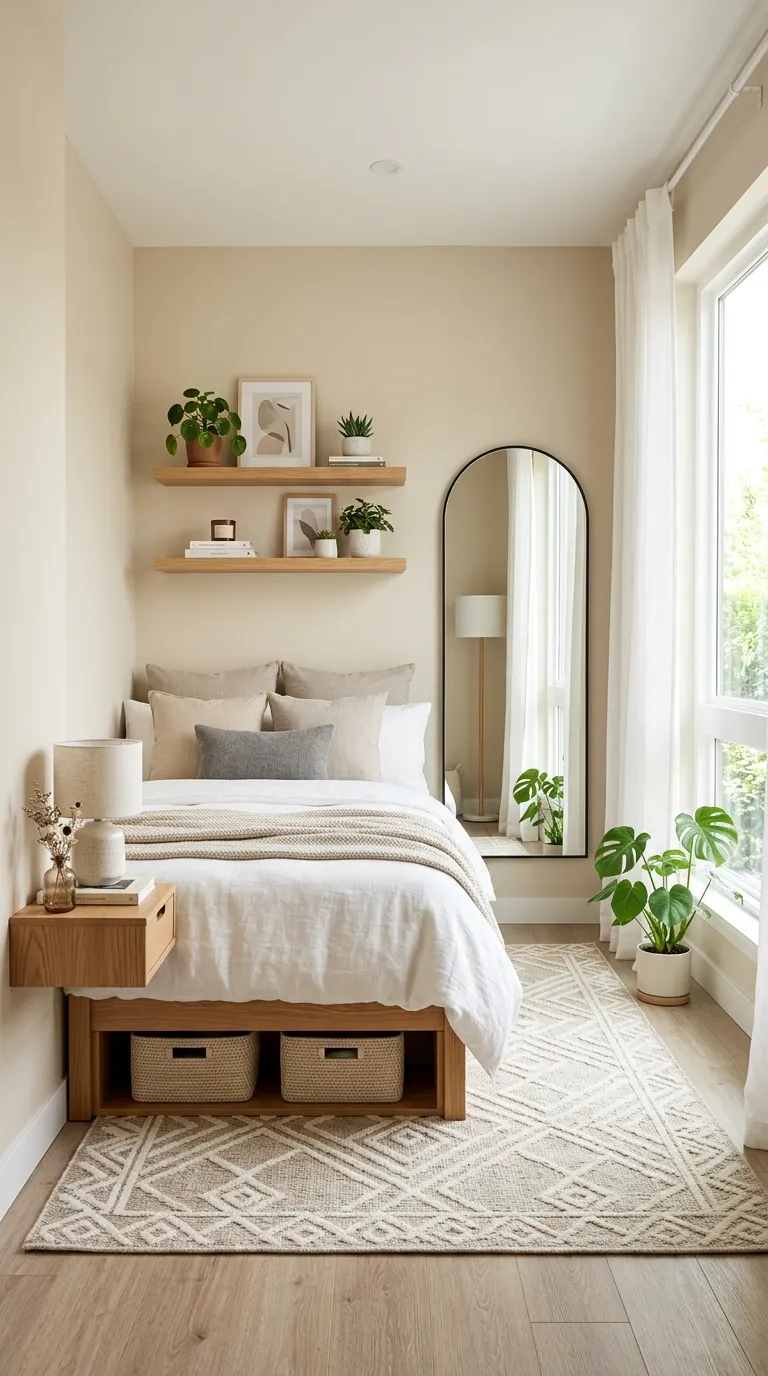
When floor space is limited, the walls become your best friend. Floating shelves add storage and display space without eating into your square footage, making them one of the most effective small bedroom storage ideas available.
Floating shelves are great for books, framed photos, plants, or folded sweaters. They also double as decor, giving you a chance to style your space while keeping surfaces like your dresser and nightstand clear.
Install shelves above your desk, beside your bed, or along an empty wall. Stick to a consistent bracket style and spacing for a clean, cohesive look, and avoid overloading a single shelf with too many items.
Pro Tip: Group items in odd numbers (three or five) and vary heights slightly to create a more visually interesting, Pinterest-worthy display.
3. Organize Vertically Instead of Horizontally
Thinking vertically is one of the most important mindset shifts in small bedroom design. Most people organize outward, spreading things across floors and surfaces. Instead, train your eye to look up.
Vertical storage solutions include tall bookcases, stacking bins, wall-mounted hooks, and hanging organizers. These options use height rather than width, which is exactly what small rooms need more of.
Start by identifying unused vertical space — above the closet, behind the door, or in the corners of the room. Add tall, narrow furniture pieces rather than short, wide ones to keep your floor plan open.
Pro Tip: A tall, slim bookshelf in a corner often holds as much as a wide dresser while taking up a fraction of the floor space.
4. Use Multi-Functional Furniture
In a small bedroom, every piece of furniture should earn its spot by doing more than one job. This is where multi-functional furniture becomes essential for real bedroom storage solutions.
A storage ottoman can serve as a footrest, extra seating, and a hidden bin for blankets. A bed frame with built-in drawers eliminates the need for a separate dresser. A desk with shelving above it combines workspace and storage in one footprint.
When shopping for new furniture, prioritize pieces with hidden compartments, drawers, or lift-up tops. It’s a small upfront investment that pays off in daily convenience.
Pro Tip: Before buying new furniture, measure your room and tape out the footprint on the floor to confirm it won’t overwhelm the space.
5. Add Over-the-Door Organizers
The back of your bedroom or closet door is prime real estate that’s easy to forget. Over-the-door organizers are inexpensive, simple to install, and require zero permanent changes to your walls.
These organizers work well for shoes, accessories, cleaning supplies, or toiletries. In a shared or dorm-style bedroom, they’re also useful for keeping personal items separate and organized without taking up shelf or drawer space.
Choose a design based on what you’re storing — clear pocket organizers for small items, hooks for bags and hats, or a shoe organizer repurposed for craft supplies or beauty products.
Pro Tip: Use an over-the-door shoe organizer with clear pockets to store chargers, remotes, and other small electronics that usually clutter your nightstand.
6. Maximize Closet Space with Dividers
Closets are often the most underutilized storage space in a small bedroom. Closet organization ideas like shelf dividers, double hanging rods, and stackable bins can dramatically increase usable space.
Dividers help separate folded items so stacks don’t topple over, while double rods effectively double your hanging space for shirts, skirts, and pants. Adding a hanging shoe rack or small drawer unit inside the closet keeps small items from cluttering shelves.
Start by removing everything from the closet, then reintroduce items by category — tops, bottoms, dresses, accessories — using dividers and bins to keep each category contained.
Pro Tip: Install a second, lower rod under your existing one to fit two rows of shorter items like shirts and folded pants.
7. Use Storage Baskets and Bins
Baskets and bins are the unsung heroes of small room organization. They’re flexible, affordable, and can be used almost anywhere — shelves, closets, under furniture, or even stacked in a corner.
Storage bins group similar items together, which makes cleanup faster and prevents small things like hair ties, cables, or craft supplies from scattering around the room. Woven baskets also add texture and warmth, making them a functional decor piece as much as a storage tool.
Label bins by category so everyone in the household (or your future self) knows exactly where things belong. This small step makes a big difference in keeping the system sustainable.
Pro Tip: Use uniform bins in a neutral color palette to create a clean, cohesive look rather than a mismatched, cluttered feel.
8. Create a Nightstand Organization System
Your nightstand sees more daily traffic than almost any other surface in your bedroom, which means it’s also one of the fastest spots to become cluttered.
A simple nightstand organization system might include a small tray for jewelry, a drawer divider for chargers and odds and ends, and a designated spot for your current book or journal. This keeps the surface clear while still giving you easy access to everyday essentials.
Start by emptying the nightstand completely, then only return items you use every night — everything else can find a new home elsewhere in the room.
Pro Tip: Add a small drawer organizer insert to prevent cords, pens, and lip balm from turning into a tangled mess.
9. Declutter Using the One-In-One-Out Rule
No organization system works long term without ongoing maintenance, and that’s where the one-in-one-out rule comes in. For every new item you bring into your bedroom, commit to removing one similar item.
This simple bedroom decluttering tip prevents the slow buildup of clutter that happens over months and years. It’s especially useful for clothing, shoes, and books — categories that tend to accumulate quickly.
Make it a habit rather than a one-time event. When you buy a new sweater, donate or discard an old one the same week, not “eventually.”
Pro Tip: Keep a donation bag in your closet at all times so removing an item takes seconds, not a special trip.
10. Utilize Hidden Storage Spaces
Every small bedroom has overlooked pockets of hidden storage — the space above the closet, the gap beside a dresser, or the awkward corner behind a door. Finding and using these areas is key to truly maximizing bedroom space.
Storage bins on top of the closet, a slim rolling cart beside furniture, or a corner shelf unit can all put dead space to work. These hidden storage spaces are ideal for items you use infrequently but still need to keep.
Walk through your room and note every unused gap, then match it with a storage solution sized specifically for that spot.
Pro Tip: A slim, wheeled cart designed for laundry rooms fits perfectly in narrow gaps and can hold anything from shoes to skincare products.
Common Small Bedroom Organization Mistakes
Even with the best intentions, it’s easy to fall into a few common traps. Here’s what to avoid:
Buying storage before decluttering. It’s tempting to buy bins and baskets first, but without decluttering, you’re just organizing clutter rather than removing it. Always declutter first, then buy storage to fit what remains.
Ignoring vertical space. Many small bedrooms feel cramped simply because all the storage is at eye level or below. Failing to use walls and high shelves wastes valuable square footage.
Keeping unused items “just in case.” Holding onto clothes that don’t fit or gadgets you haven’t used in years takes up space that could serve your daily life instead.
Overcrowding shelves. Packing every shelf to capacity looks cluttered, even if everything is technically “organized.” Leave some breathing room for a calmer visual effect.
Poor closet organization. A disorganized closet often spills out into the rest of the bedroom. Without dividers, labels, or a clear system, closets become a dumping ground rather than a storage solution.
Best Products for Small Bedroom Organization
If you’re ready to start shopping, here are the product categories that consistently deliver the best results for compact spaces:
- Storage bins — stackable, uniform bins for closets, shelves, or under furniture
- Under-bed organizers — low-profile bins or bags designed to slide under bed frames
- Floating shelves — wall-mounted shelving for books, decor, and small essentials
- Storage ottomans — dual-purpose seating with hidden interior storage
- Closet organizers — dividers, double rods, and hanging shelf units
Look for products with a slim profile, stackability, and materials that match your room’s overall aesthetic, whether that’s minimalist, cozy, or eclectic.
Frequently Asked Questions
How do I organize a very small bedroom? Start by decluttering everything you don’t use regularly, then focus on vertical storage solutions like floating shelves and tall furniture. Multi-functional pieces, such as a storage bed or ottoman, help you get the most out of limited square footage.
What is the best storage solution for a tiny bedroom? Under-bed storage and floating shelves are typically the best starting points, since they use space that’s otherwise wasted. Combine these with closet dividers for a complete system.
How can I make my small bedroom feel bigger? Keep surfaces clear, use light colors, and prioritize vertical storage over floor-based furniture. A well-organized room with minimal clutter almost always feels larger than a messy one, regardless of actual square footage.
What should I get rid of when decluttering a bedroom? Start with clothes that no longer fit, duplicate items, broken or unused gadgets, and anything you haven’t touched in the past year. If you hesitate for more than a few seconds, it’s a good candidate to donate or discard.
How often should I organize my bedroom? A quick daily tidy-up combined with a deeper declutter every three to six months keeps most bedrooms manageable. Following the one-in-one-out rule in between helps prevent clutter from building back up.
Is under-bed storage bad for airflow or dust? Using sealed bins rather than open boxes minimizes dust buildup and keeps stored items protected. It’s a good idea to vacuum under the bed every few months regardless of what’s stored there.
What’s the difference between organizing and decluttering? Decluttering means removing items you no longer need, while organizing means arranging what’s left in a way that’s functional and easy to maintain. Decluttering should always come first.
Final Thoughts
Small bedroom organization doesn’t require a full renovation or a big budget — it requires a plan. From under-bed storage containers to floating shelves and the one-in-one-out rule, these ten hacks give you practical, achievable ways to maximize every inch of your space.
The key is to start small. Pick just one hack from this list — maybe it’s finally tackling that under-bed clutter, or adding a couple of floating shelves — and implement it today. Small changes add up quickly, and before long, your bedroom will feel like the organized, peaceful retreat it was always meant to be.
Your small bedroom isn’t a limitation. With the right systems in place, it’s simply a space waiting to be organized.