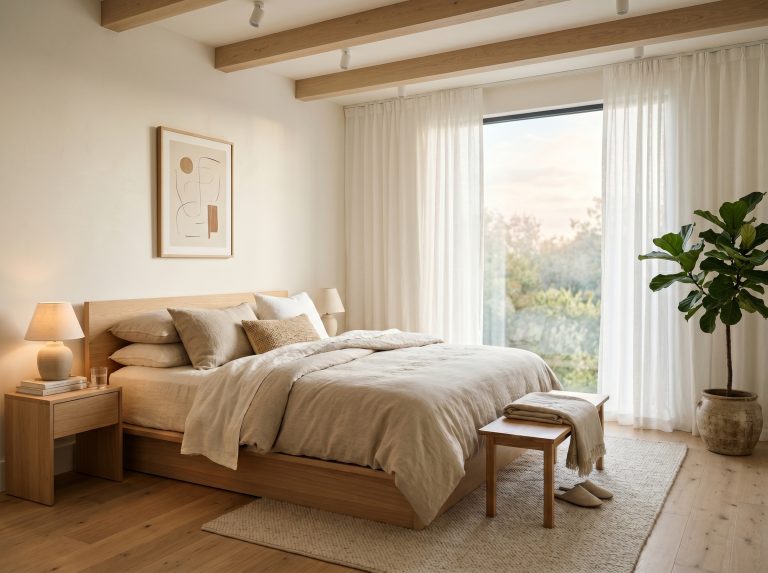
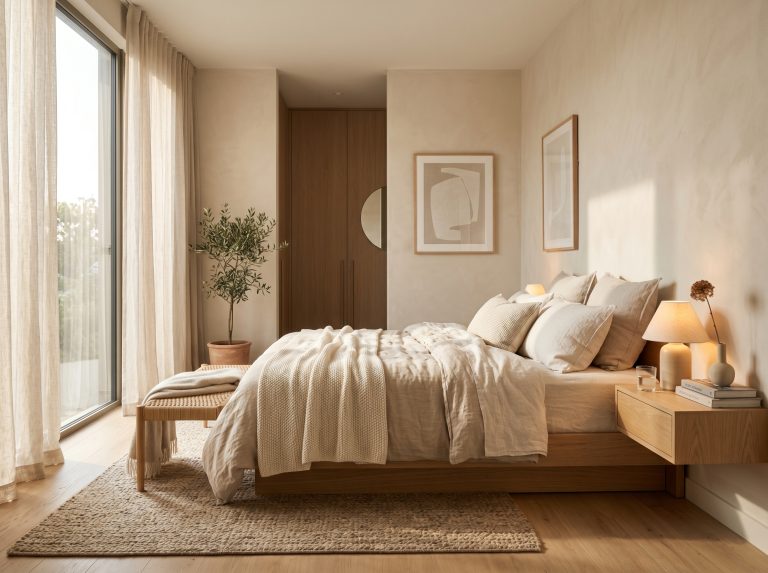
10 Minimalist Bedroom Design Ideas that make room feel bigger
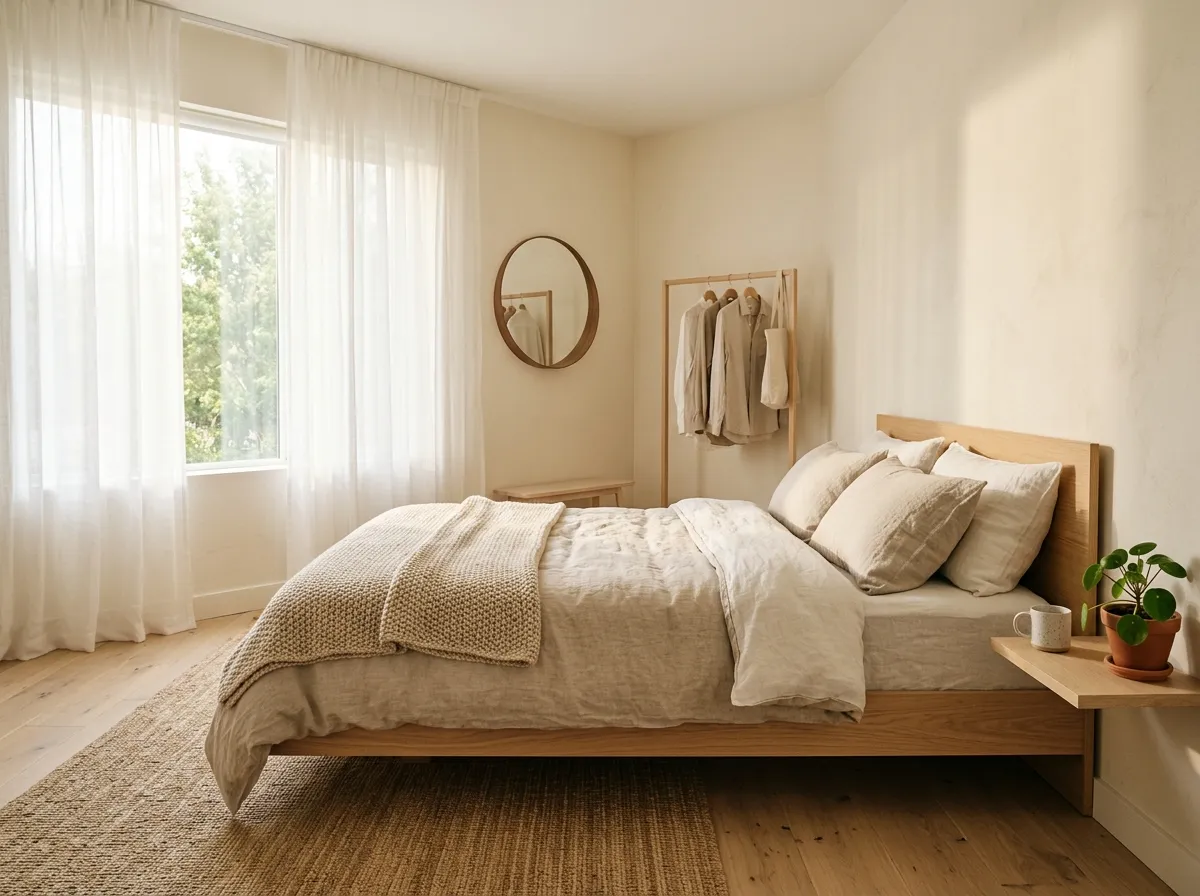
Small bedrooms often feel cramped the moment you add a bed, a dresser, and a nightstand. Every extra item seems to eat up floor space. Walls close in. Clutter piles up fast, and before you know it, your cozy room feels like a storage unit.
This is exactly why minimalist bedroom design has become so popular. A minimalist bedroom design strips away the excess and keeps only what serves a purpose. Fewer objects mean more visual breathing room. Lighter colors bounce more light around. Smart layouts open up pathways instead of blocking them.
The result? A small room that feels open, calm, and surprisingly spacious.
In this guide, you’ll find 10 practical minimalist bedroom ideas you can start using today. We’ll cover color choices, furniture selection, storage tricks, and styling tips that all work together to make your space feel bigger than it actually is. You’ll also get a checklist, common mistakes to avoid, and answers to the questions people ask most.
Let’s turn your small bedroom into a room that finally breathes.
[IMAGE: Bright minimalist bedroom with white walls]
1. Choose Light Colors That Reflect More Light
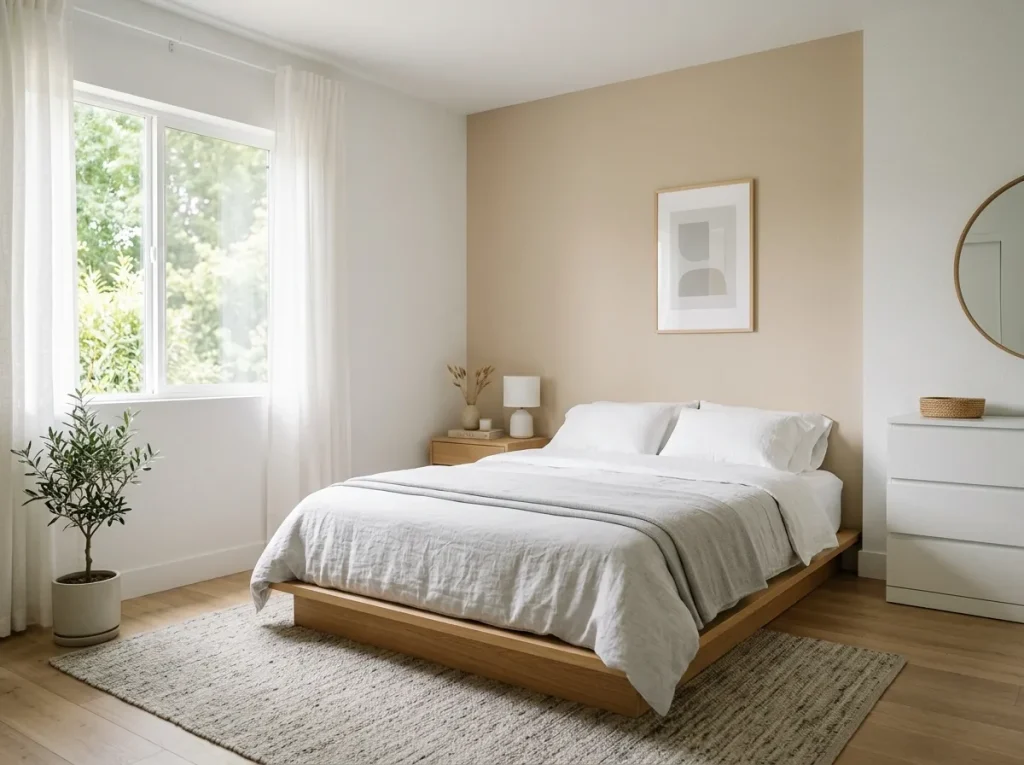
Color is one of the fastest ways to change how a room feels. Dark walls absorb light and make small spaces feel closed in. Light colors do the opposite — they bounce light around and open the room up visually.
For a minimalist bedroom design that feels airy, stick to a palette of neutral bedroom colors like:
- White — the classic minimalist base, reflects the most light
- Cream — softer than white, adds warmth without heaviness
- Soft beige — grounds the room while staying light
- Light gray — modern and calm, pairs well with almost any accent
These shades work because your eye doesn’t stop at a hard color break. Instead, walls seem to blend into ceilings and trim, which tricks the brain into perceiving more space than there really is.
If pure white feels too stark, try warm off-whites or greige tones instead. They still reflect light but feel cozier, which is perfect if you’re aiming for a cozy minimalist bedroom rather than a clinical one.
2. Use a Low-Profile Bed
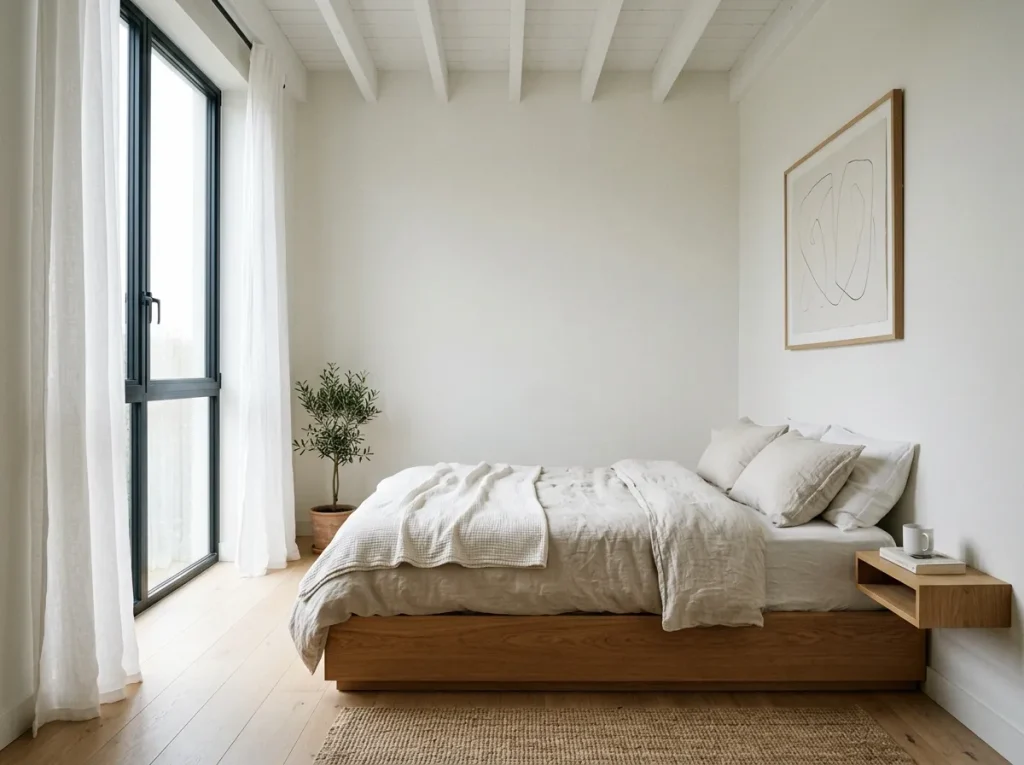
Your bed is usually the largest object in the room, so its height matters more than you’d think.
Platform beds sit low to the ground and skip the bulky box spring. This single swap changes the entire feel of a small bedroom.
Here’s why it works:
- Less visual mass — a low bed takes up less vertical space, so your eye reads the room as more open
- Better proportions — a low-profile frame leaves more visible wall above it, which makes ceilings feel higher
- Cleaner lines — platform beds usually have simple, minimal frames that don’t add visual clutter
A tall, ornate headboard might look grand in a spacious primary suite, but in a small room, it competes for attention and shrinks the space. A low platform bed with a simple frame lets the room breathe instead.
[IMAGE: Small bedroom with platform bed]
3. Remove Unnecessary Furniture
Every piece of furniture you don’t need is taking up space you do need.
Walk through your bedroom and ask a simple question about each item: does this serve a real purpose? If not, it’s time to let it go.
Start with the essentials only:
- Bed
- One nightstand (or two small ones, if space allows)
- A dresser or wardrobe
- Maybe a small chair or bench
Everything else — extra side tables, oversized armchairs, a bookshelf you rarely use — can go elsewhere or leave the room entirely.
This isn’t about living with less for the sake of it. It’s about creating open pathways so you can move through the room without squeezing past furniture. Better flow makes a small bedroom design feel far more livable, and it’s one of the fastest changes you can make in a single afternoon.
4. Add Smart Hidden Storage
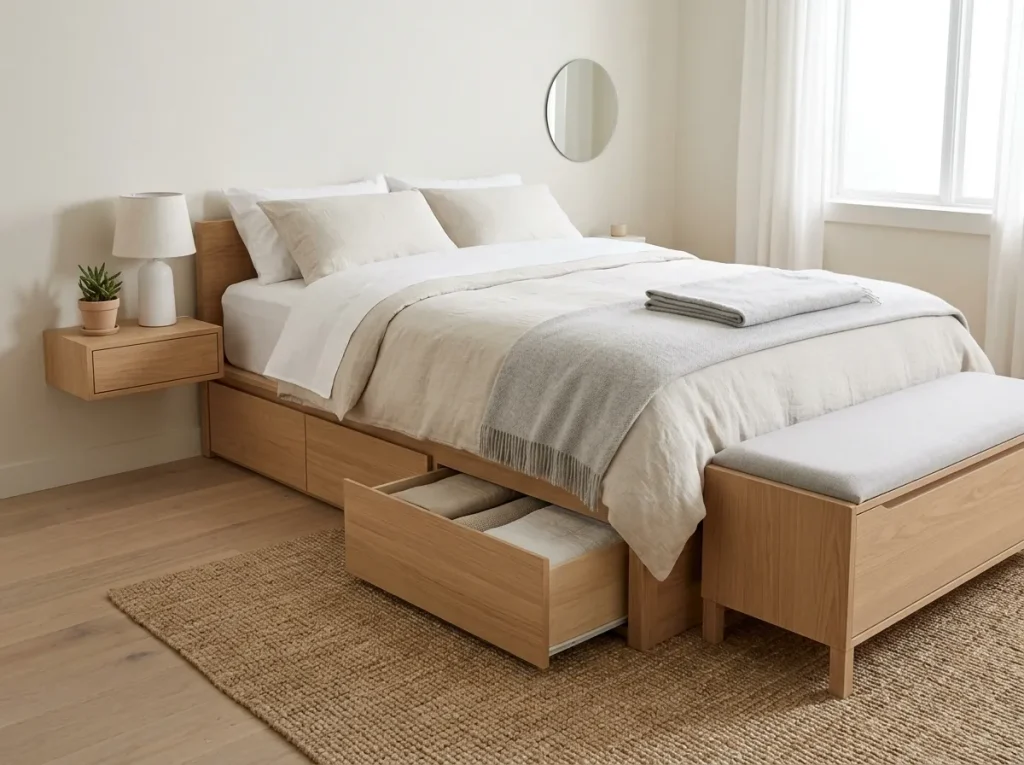
Minimalism doesn’t mean you own fewer things. It means your things are organized so they don’t clutter your visual space.
Smart hidden storage is the secret weapon here. It keeps your bedroom organization tight without sacrificing floor space.
Try these space-saving furniture options:
- Under-bed storage — bins or drawers that slide beneath your bed frame, perfect for off-season clothes or extra linens
- Storage beds — platform beds with built-in drawers underneath, combining two functions in one footprint
- Storage benches — placed at the foot of the bed, they double as seating and a place to stash blankets or shoes
The goal is simple: keep surfaces clear while still having a home for everything you own. When storage is built into furniture you already need, you’re not adding bulk — you’re multiplying function.
[IMAGE: Modern minimalist bedroom with hidden storage]
5. Maximize Natural Light
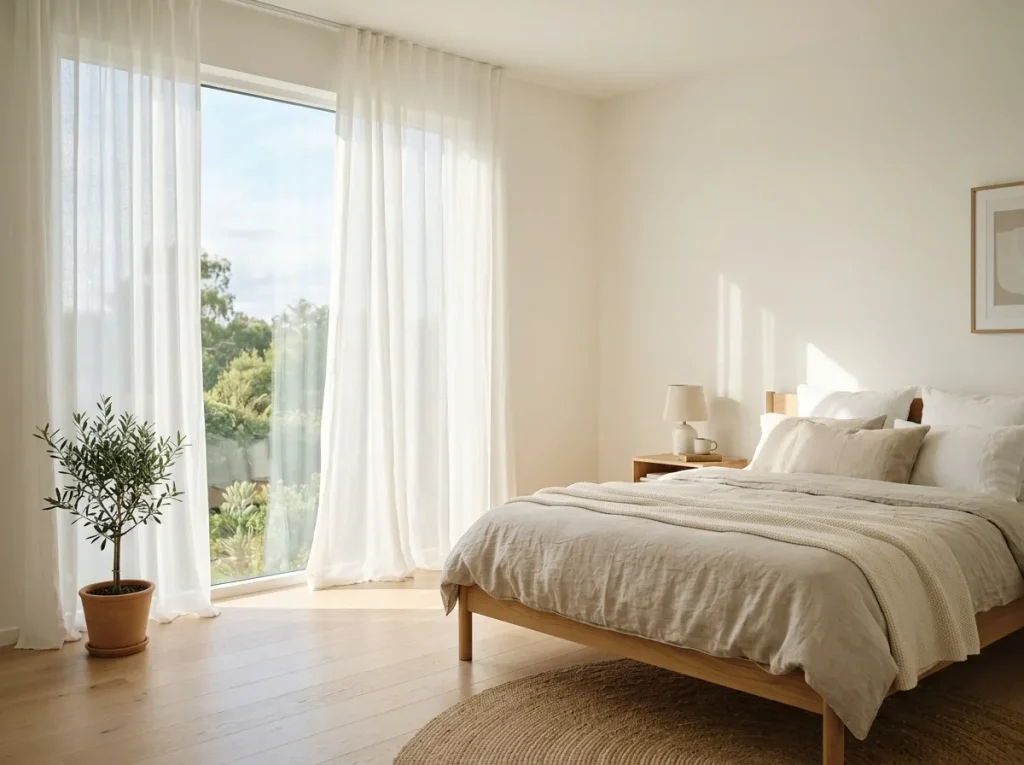
Natural light does more for a small room than almost any design trick. It makes colors look truer, softens shadows, and makes the whole space feel alive.
Start with your window treatments. Heavy, dark drapes block light and visually shrink your window. Swap them for sheer curtains that let sunlight filter through while still offering privacy.
A few more light-boosting tips:
- Keep curtain rods mounted close to the ceiling to draw the eye upward
- Avoid blocking windows with furniture
- Use lightweight fabrics that move air and light through the room
If your bedroom doesn’t get much natural light, lean on layered lamps with warm bulbs to mimic that same soft, open feeling in the evening.
6. Decorate with Fewer but Better Pieces
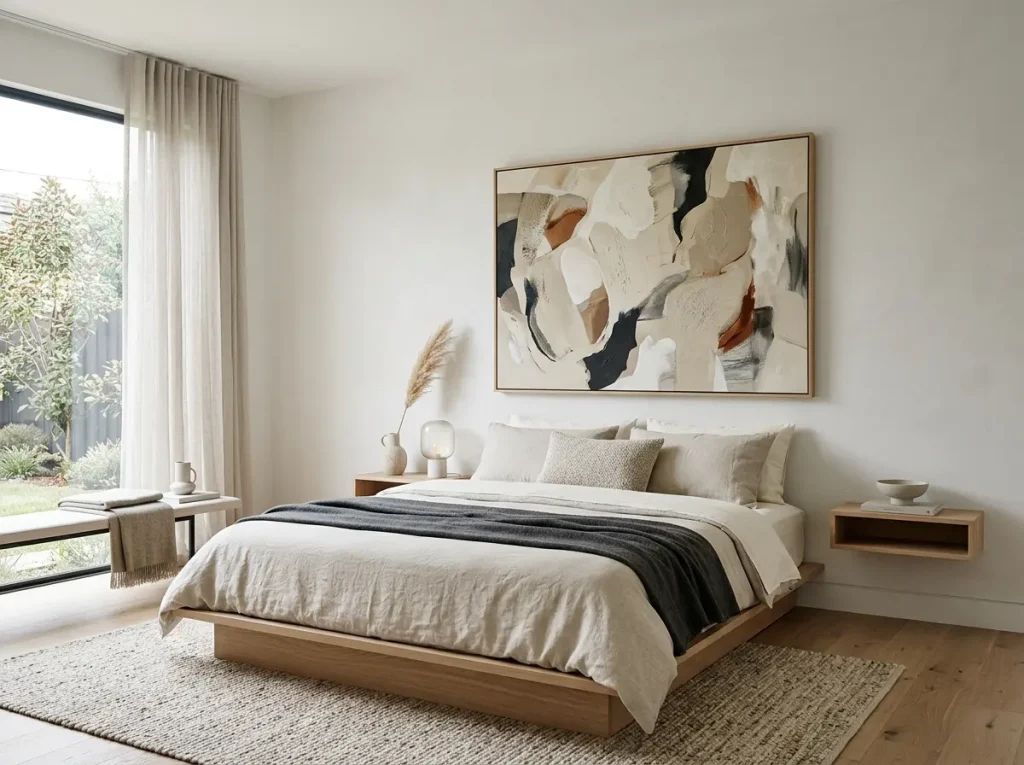
A common mistake in small rooms is filling every wall with décor. It feels productive, but it actually adds visual noise.
Minimalist room decor works on a different principle: choose fewer pieces, but make them count.
Instead of five small prints scattered across a wall, choose one large piece of art that makes a statement. Instead of a shelf full of trinkets, pick two or three objects you genuinely love.
This approach does two things. First, it reduces clutter, which keeps the room feeling open. Second, it actually draws more attention to the pieces you do keep, because they’re not competing with a dozen other items for attention.
Quality over quantity isn’t just a nice phrase here — it’s a functional design rule for small spaces.
7. Install Floating Shelves
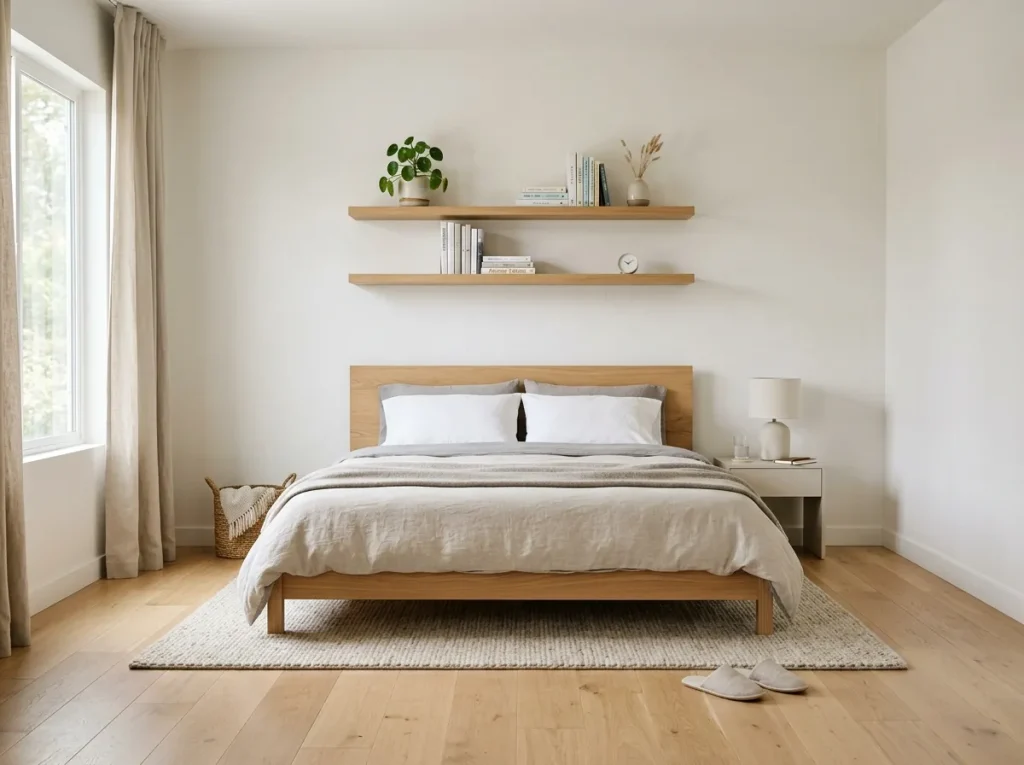
When floor space is tight, the walls become your best friend.
Floating shelves add storage and display space without taking up a single square foot of floor. That’s a big deal in a small bedroom design where every inch matters.
Use them for:
- Books you’re currently reading
- A small plant or two
- Framed photos
- A speaker or lamp
Because floating shelves have no visible legs or brackets, they read as light and airy rather than bulky. This vertical storage approach keeps the floor open, which is one of the most effective ways to make a room feel larger than it is. It also gives the space a clean, modern look that fits naturally into a minimalist bedroom aesthetic.
8. Use Mirrors to Create Depth
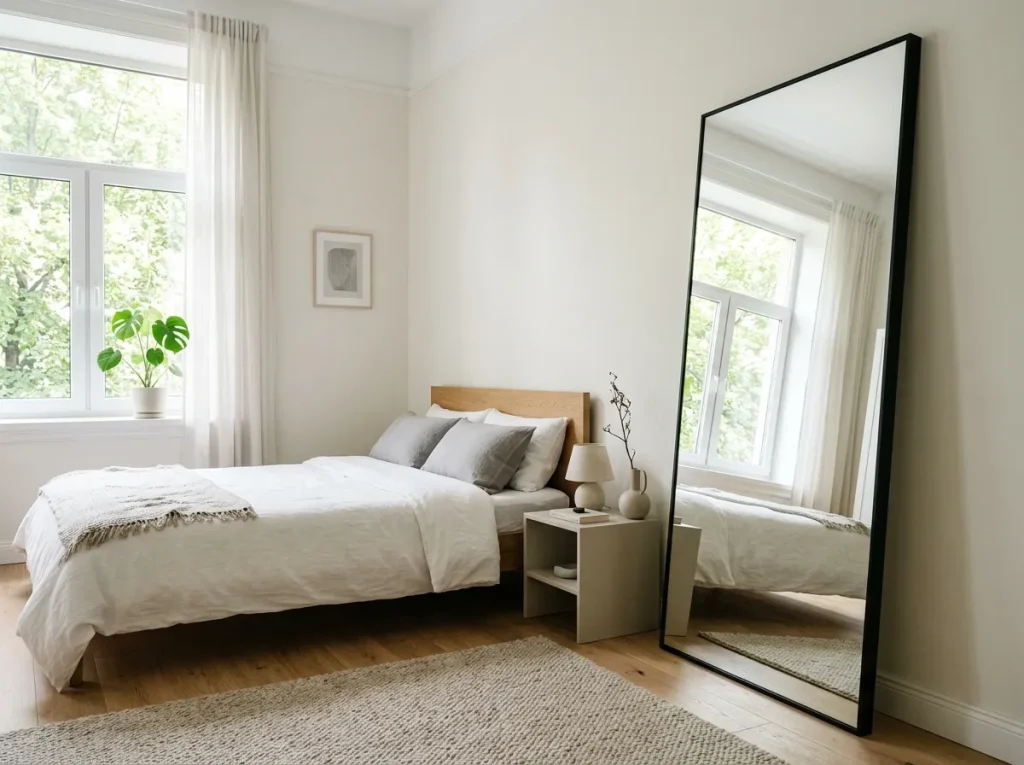
Mirrors are a classic small-space trick for a reason — they genuinely work.
A well-placed mirror reflects both light and space, tricking the eye into perceiving a room that’s deeper than it actually is.
For the best effect:
- Place a mirror across from a window so it reflects natural light
- Choose one large mirror rather than several small ones for a cleaner look
- Lean a full-length mirror against a wall for an easy, low-effort update
This simple addition can make a small bedroom design feel noticeably more open, often more than any other single change on this list.
9. Choose Multi-Functional Furniture
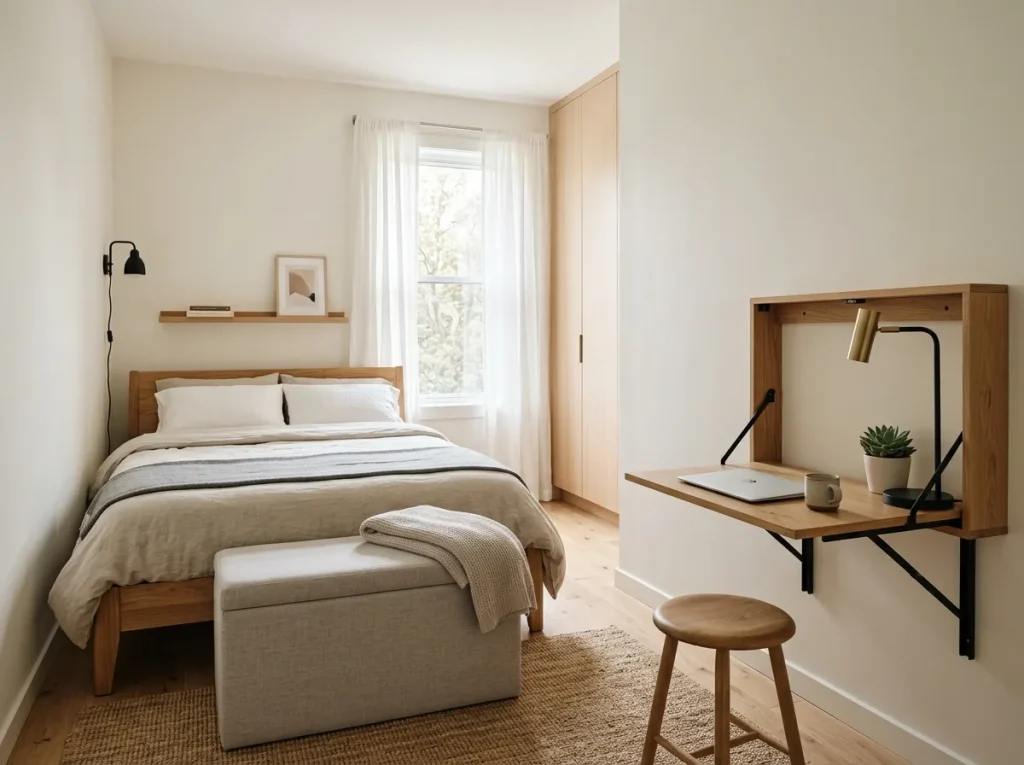
In a small bedroom, every piece of furniture should ideally do more than one job.
Space-saving furniture is built around this idea, and it’s one of the smartest ways to furnish a compact room without making it feel packed.
Some great options include:
- Storage ottomans — extra seating that doubles as a place to hide blankets or books
- Foldable desks — a work surface that tucks away flat against the wall when you’re done for the day
- Bench seating with storage — comfort and organization in one compact footprint
This approach means you get all the function you need without adding extra bulk. It’s a core principle of good minimalist bedroom design: let each object earn its place by doing double duty.
10. Keep Bedding Simple and Neutral
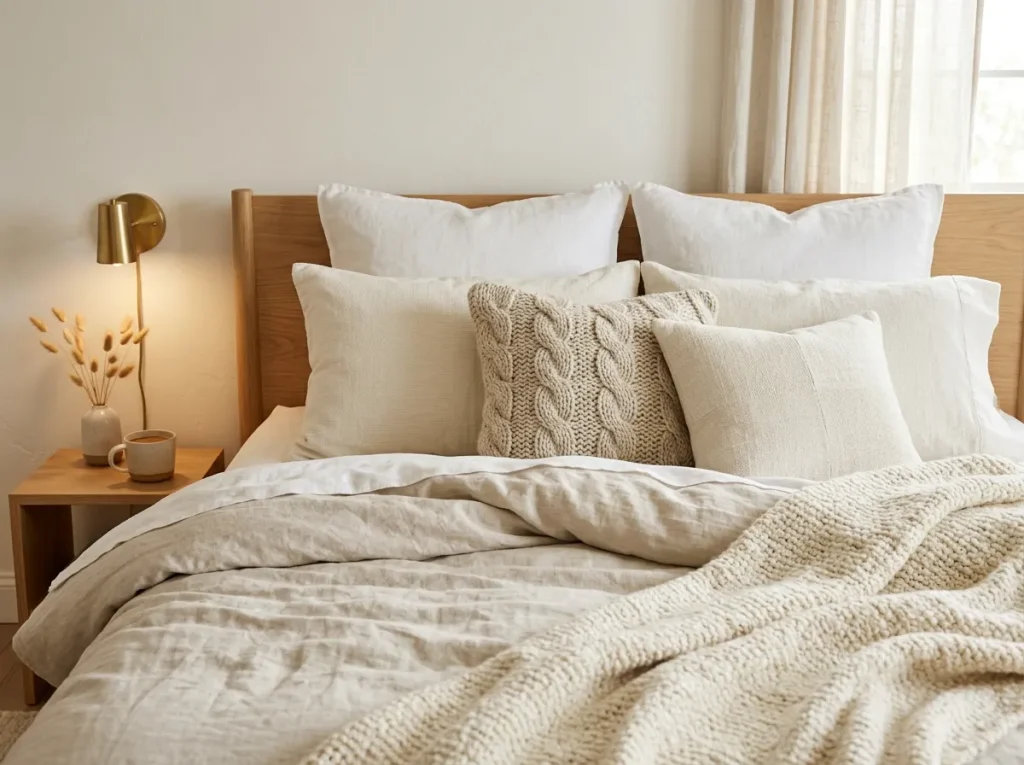
Your bed takes up the most visual real estate in the room, so what you put on it matters.
Busy patterns, bold colors, and mismatched textiles can make even a well-designed small room feel chaotic. Neutral bedding keeps things calm and cohesive.
For a cozy minimalist bedroom, try:
- A solid or subtly textured duvet in white, cream, or soft gray
- Layered textures — a waffle-knit throw, a linen duvet cover, a chunky knit pillow
- One or two accent pillows instead of six
Texture is the key here. Simple bedding doesn’t have to feel flat or boring. Mixing materials like linen, cotton, and knit adds warmth and depth without adding visual clutter.
[IMAGE: Cozy neutral minimalist bedroom]
Common Mistakes That Make Small Bedrooms Feel Smaller
Even with good intentions, a few habits can quietly undo all your hard work. Watch out for these:
- Overcrowding the walls — too much art or too many frames creates visual clutter, even if the floor is clear.
- Using dark, heavy curtains — they block light and make windows feel smaller than they are.
- Choosing oversized furniture — a bed or dresser that’s too big for the room will always make it feel tight.
- Skipping storage planning — without a home for everyday items, clutter builds up fast.
- Ignoring the ceiling line — hanging curtains or shelves too low cuts the room’s visual height.
- Mixing too many colors or patterns — a busy palette competes for attention and makes the room feel chaotic.
- Leaving pathways blocked — furniture placed in walking paths makes the whole room feel harder to move through.
Avoiding these mistakes is just as important as applying the ideas above. Sometimes the biggest upgrade is simply removing what’s not working.
Minimalist Bedroom Design Checklist
Use this quick checklist as you plan your own small bedroom organization:
- [ ] Walls painted in a light, neutral color
- [ ] Bed frame is low-profile or platform style
- [ ] Only essential furniture remains in the room
- [ ] Under-bed or built-in storage is in use
- [ ] Curtains are sheer or lightweight
- [ ] Décor is limited to a few statement pieces
- [ ] At least one floating shelf installed
- [ ] A mirror placed to reflect light or a window
- [ ] Furniture serves more than one function where possible
- [ ] Bedding is simple, neutral, and layered with texture
Work through this list one item at a time. You don’t need to do everything in a single weekend — small, consistent changes add up fast.
Frequently Asked Questions
How do I make a small bedroom look bigger? Focus on light colors, a low-profile bed, and clear floor space. Add a mirror to reflect light, keep decor minimal, and use vertical storage like floating shelves so the floor stays open.
What is the best color for a minimalist bedroom? White, cream, soft beige, and light gray all work well because they reflect more light and keep the room feeling airy. Warmer neutrals like greige are a good choice if you want a cozier feel.
Is minimalist design still popular in 2026? Yes. Minimalist bedroom design continues to trend, especially as more people prioritize calm, clutter-free spaces over maximalist trends. The focus has shifted slightly toward warmer, cozier minimalism rather than stark, cold interiors.
What furniture works best in a small bedroom? Low-profile platform beds, storage benches, and multi-functional pieces like storage ottomans or foldable desks work best. Choose furniture that fits the scale of the room and serves more than one purpose whenever possible.
Conclusion
A small room doesn’t have to feel small. With the right minimalist bedroom design choices — light colors, a low bed, smart storage, and just a few well-chosen decor pieces — you can create a space that feels open, calm, and genuinely bigger.
You don’t need to tackle all 10 ideas at once. Pick one change, whether it’s swapping your curtains or clearing off your nightstand, and build from there. Small, intentional updates add up to a room that finally feels like it has room to breathe.
Your small bedroom has more potential than you think. It just needs a little less stuff and a little more light.